24 May 2026
Kenya's 8-Year Car Import Age Limit: Everything You Need to Know Before You Buy in 2026
f you have been shopping for a used car in Kenya in 2026, you have probably come across the phrase 8-year import age limit — and wondered exactly what it means for you as a buyer.
The rule is simple on the surface. But the impact it has on used car prices in Kenya, the models available at dealerships, and what you can actually afford has been significant — and most buyers still do not fully understand it.
This is the guide the team at Mombasa Car Market has put together to explain the rule clearly, tell you what changed, and help you buy the right car at the right price despite the new restrictions.
What Is Kenya's 8-Year Car Import Age Limit?
Kenya's 8-year import age rule means that any used vehicle being imported into the country must have been manufactured no more than 8 years before the date of import.
In practical terms: if you are importing a car in 2026, the vehicle must have been manufactured in 2018 or later. Anything older than that cannot legally enter Kenya.
This rule is enforced by the Kenya Bureau of Standards (KEBS) and the Kenya Revenue Authority (KRA). Vehicles that do not meet the age requirement are rejected at the port — and that cost falls on the importer.
The rule was officially tightened and strictly enforced from January 2025, replacing the previous 10-year limit that had been in place for years.
Why Did the Government Introduce This Rule?
The government's stated goal behind the 8-year age limit for car imports in Kenya was straightforward:
- Road safety — older vehicles are statistically more likely to fail mechanically and contribute to accidents
- Environmental standards — newer vehicles produce fewer emissions and are more fuel-efficient
- Consumer protection — buyers were frequently being sold worn-out, high-mileage vehicles with tampered odometers
- Economic alignment — the rule pushes Kenya towards newer, cleaner vehicle stock, consistent with regional and global trends
The shift from 10 years to 8 years removed a significant chunk of vehicles that were previously legal to import — particularly the older, cheaper models that budget buyers relied on.
How the 8-Year Rule Has Changed the Kenyan Car Market
1. Fewer Budget Cars Are Available
This is the most direct impact. Vehicles that were previously the most affordable options for Kenyan buyers — 2013 to 2015 model year Toyotas, Nissans and Hondas — can no longer be imported legally.
The supply of sub-Ksh 500,000 vehicles has tightened considerably. Where you could once find a clean Toyota Vitz or Honda Fit for Ksh 350,000, those units are now either already on Kenyan roads or simply no longer available through the import channel.
What this means for buyers: Budget buyers need to be realistic. The floor price for a reliable imported car in 2026 has shifted upward. Expect to spend at least Ksh 500,000 to Ksh 700,000 for a dependable entry-level vehicle.
2. The Quality of Available Cars Has Gone Up
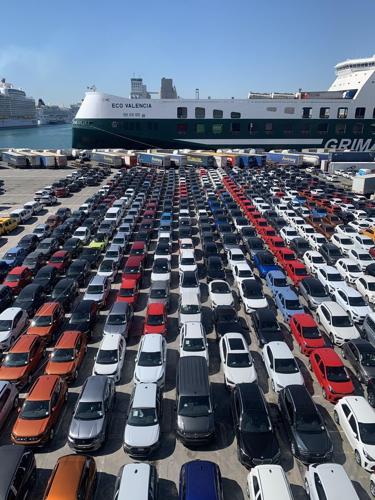
While prices have risen, so has overall quality. Vehicles arriving at Mombasa Port today are newer, have lower mileage, and come with more modern features — better fuel economy, more safety technology, and cleaner engine systems.
Buyers who can stretch their budget are finding that what Ksh 800,000 buys today is genuinely better than what the same money bought two or three years ago.
3. Hybrid Cars Have Become Far More Attractive
The 8-year rule, combined with the government's lower excise duty on hybrid vehicles (10% for hybrids versus 25% for regular petrol cars), has created a major shift towards hybrids in the used car market.
Models like the Nissan Note e-Power, Toyota Aqua, and Honda Fit Hybrid now fall comfortably within the 8-year window and qualify for the lower tax rate — making them genuinely competitive with equivalent petrol vehicles on total cost of ownership.
4. Japanese Imports Remain the Dominant Supply Source
Japan continues to supply the vast majority of used cars entering Kenya. The 8-year rule has not changed this — it has simply shifted demand towards newer Japanese model years.
Japan's JEVIC (Japan Export Vehicle Inspection Center) certification process ensures that vehicles being exported to Kenya meet the required standards before they even leave Japanese shores. For buyers, this remains one of the strongest quality guarantees available in the used car market.
Which Cars Are Still Available Under the 8-Year Rule?
Here is what the 8-year import limit means in real terms for specific models Kenyans love:
- Toyota Axio — 2018 and newer models qualify. Plenty of clean, low-mileage units in the Ksh 700,000 to Ksh 1,400,000 range
- Nissan Note e-Power — 2017 onwards qualifies. The fastest-growing model in Kenya's used car market in 2026 — and for good reason
- Toyota Fielder — 2018 and newer qualify. Still Kenya's favourite family station wagon
- Subaru Forester — 2018 and newer. Strong demand from upcountry buyers who need AWD reliability
- Toyota Harrier — 2018 and newer. Kenya's most searched SUV by a wide margin, with hybrid variants increasingly popular
- Mazda Demio / Mazda 2 — 2018 and newer. Affordable, fuel-efficient and stylish
- Honda Fit / Honda Jazz — 2018 and newer, including the excellent e:HEV hybrid variant
- Toyota Land Cruiser Prado — 2018 and newer. Premium supply is tighter but quality is excellent
What Happened to Cars That Were Already in Kenya Before the Rule?
This is a question we get asked often at Mombasa Car Market.
Vehicles that were legally imported before the rule change are not affected. If a 2013 Toyota Vitz entered Kenya before the age limit was enforced, it is fully legal to own, drive, sell and transfer ownership inside the country.
What you cannot do is import a 2013 vehicle today. The rule applies at the point of importation — not to vehicles already registered in Kenya.
This means the used car market inside Kenya still has a stock of older vehicles available — but that stock is not being replenished. Over time, as these vehicles age out of service, the overall fleet on Kenyan roads will get progressively newer.
Common Mistakes Buyers Make Because of the 8-Year Rule
Buying an Illegally Imported Vehicle
Some unscrupulous importers have attempted to falsify manufacturing dates or import documents to bypass the 8-year restriction. Vehicles brought in through this route are illegal and can be seized by authorities.
How to protect yourself: Always verify the chassis number against the NTSA portal and request the full KEBS clearance and JEVIC certificate before any purchase. If a dealer cannot produce these documents, walk away.
Assuming Cheap Old Listings Are Legitimate Imports
If you see a listing for a 2013 or 2014 model being advertised as a "fresh import," that vehicle has either been misrepresented or entered the country through irregular channels.
Legitimate imports from Japan in 2026 will be 2018 model year or newer — without exception.
Waiting for Prices to Drop
Some buyers are holding off, hoping that the restriction of supply will eventually force prices down. The data does not support this. With the 8-year rule now firmly in place and consistently enforced, the floor price for compliant vehicles is unlikely to fall significantly.
The smarter move is to buy now from a verified dealer, plan your budget around 2026 market realities, and stop waiting for a correction that is unlikely to come.
How to Buy Smart Under the 8-Year Import Rule
1. Know Your Budget and Adjust Your Expectations
The Ksh 400,000 to Ksh 500,000 end of the market is tighter than it was two years ago. If this is your budget, you are looking at locally registered older vehicles — not fresh imports. That is not necessarily a bad thing, but it means the inspection process becomes even more critical.
2. Always Verify the Year of Manufacture — Not Just the Model Year
Model year and year of manufacture are sometimes different, particularly for Japanese domestic market vehicles. The year of manufacture on the logbook and chassis plate is what KEBS uses to determine eligibility — confirm this before purchase.
3. Buy From a Verified, Physical Dealer
The 8-year rule has made the cost of compliance higher for importers. Verified dealerships absorb this cost and pass only legitimate, cleared vehicles to buyers. Buying from anonymous online listings or individuals without a registered business address significantly raises your risk.
4. Consider Hybrids Seriously
With the combination of the 8-year rule pushing buyers towards newer vehicles and the government's lower excise duty on hybrids, the economics of buying a hybrid used car in Kenya in 2026 have never been more compelling. At Ksh 200 per litre for fuel, the monthly savings on a Nissan Note e-Power versus an equivalent petrol car are real and measurable.
5. Get an Independent Inspection
This applies to every car at every price point. A qualified mechanical inspection costs a few thousand shillings and can save you hundreds of thousands. Never skip it regardless of how clean the car looks or how reputable the dealer appears.
Frequently Asked Questions About the 8-Year Import Rule
Can I import a car that is exactly 8 years old?
Yes — the rule allows vehicles up to and including 8 years old from the date of manufacture. A vehicle manufactured in 2018 is eligible for import in 2026. A vehicle manufactured in 2017 is not.
Does the 8-year rule apply to electric vehicles?
Yes, the 8-year age limit applies to all vehicle categories including electric and hybrid vehicles. However, given that most affordable EVs are relatively recent models, this is rarely a practical constraint for electric vehicle imports.
What happens if a car fails KEBS inspection at Mombasa Port?
Vehicles that fail inspection or do not meet the age requirement are rejected and must be re-exported at the importer's expense. This is why buying through a verified dealer — who handles all import compliance as standard — protects you from receiving a car with hidden documentation problems.
Are there any exceptions to the 8-year rule?
Special purpose vehicles, ambulances, and certain categories of heavy commercial vehicles may be subject to different rules. For standard passenger cars and SUVs, the 8-year limit is applied without exception.
Will the age limit change again?
There has been no official announcement of any planned change to the 8-year limit as of 2026. Industry bodies have lobbied for flexibility, but the government has held its position. Plan your purchase based on current rules, not speculative future changes.
Final Thoughts: The 8-Year Rule Is Not Your Enemy
Kenya's 8-year car import age limit has made buying a used car more expensive — that is an undeniable reality. But it has also made the used car market safer, cleaner, and more transparent than it has ever been.
The buyers who are thriving in this market are not the ones chasing the cheapest possible price. They are the ones who understand the rules, adjust their budgets accordingly, and buy from dealerships they can trust and locate physically.
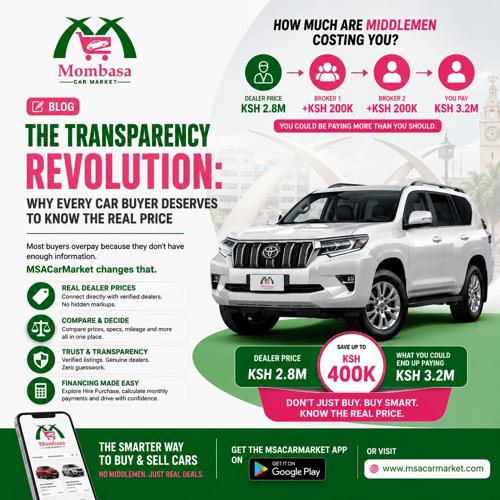
At Mombasa Car Market, every vehicle listed on our platform comes from a verified, physically present dealer. All imports are fully compliant with Kenya's 2026 import regulations — JEVIC certified, KEBS cleared, and NTSA registered. No brokers. No anonymous listings. No hidden surprises.
Browse our full selection of used cars for sale in Kenya at www.msacarmarket.com or speak to our team directly:
- Call / WhatsApp: +254 757 360 543
- Email: info@msacarmarket.com
- Location: Ganjoni, Mombasa